

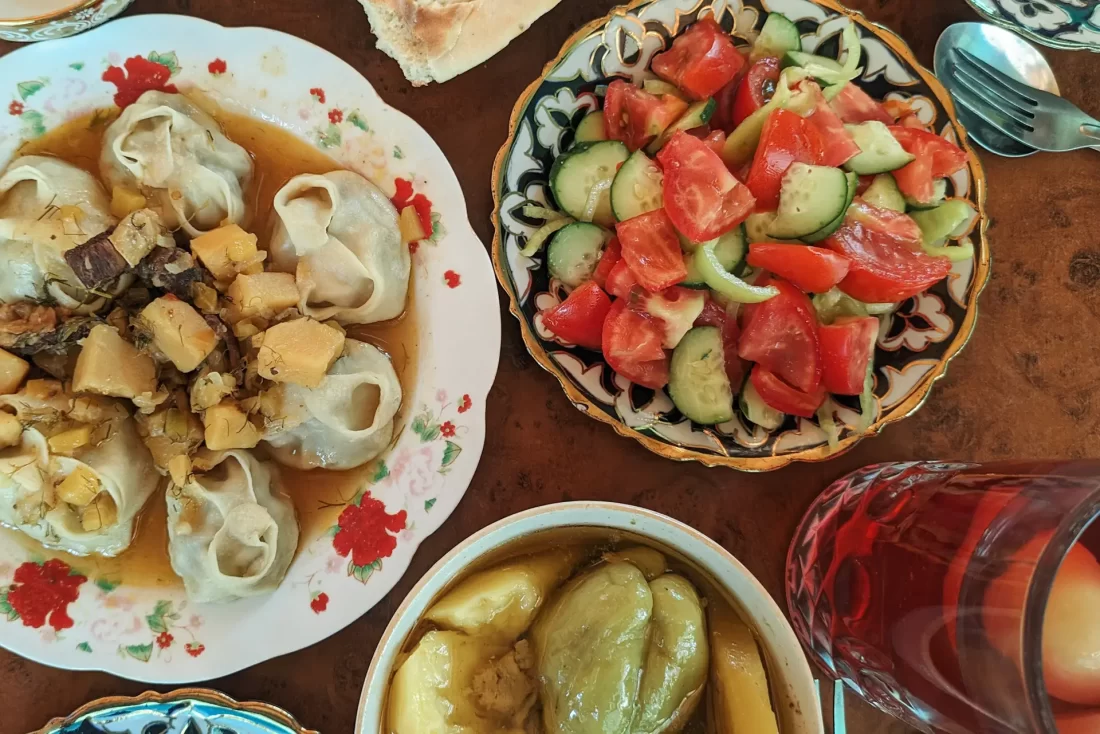
11 Delicious Must-Try Uzbek Foods: Traditional Dishes & Dining Guide (2026)

Uzbek food is renowned for its rich flavors and diverse influences, reflecting the region’s history as a cultural crossroads along the Silk Road. Uzbekistan offers a rich culinary heritage with a variety of delicious dishes for travellers to try.
Admittedly, when I first started planning my journey through Central Asia along the ancient Silk Road, I wasn’t quite sure what to expect from the local food. Uzbek cuisine isn’t something most of us encounter often back home, and I mistakenly assumed that its low profile meant it might not be very exciting.
I couldn’t have been more wrong!
Uzbekistan’s culinary landscape blew me away. Rooted in deep traditions of hospitality, Central Asian trade history, and vibrant bazaar culture, Uzbek food is a rich blend of slow-cooked meats, hand-pulled noodles, fragrant spices, and sacred breadmaking rituals. From bustling communal plov centers in Tashkent to bright green dill noodles served inside the ancient city walls of Khiva, eating your way through Uzbekistan is half the adventure.
Whether you’re looking for iconic street food, hearty comfort dishes for chilly evenings, or advice on navigating menus as a vegetarian, this complete guide covers the absolute best Uzbek dishes you need to taste.
To help you decide what to order on the go, every dish below includes an At-a-Glance Quick Facts Box detailing dish types, primary ingredients, flavor profiles, and the exact local restaurants where I had the absolute best versions!
What Makes Uzbek Food Unique?
Before diving into the dishes, it helps to understand a few golden rules of Uzbek dining culture:
Specialized Kitchens: In Uzbekistan, restaurants that specialize in just one dish (like a dedicated lagman house or plov center) almost always serve superior food compared to general menu spots.
Generous Sharing: Portion sizes are big, and meals are meant to be shared over long conversations.
Fresh Herbs & Warm Spices: Dill, coriander, cumin, paprika, and fresh cilantro are the backbone of almost every marinade and soup.
Here are some of the foods you need to try when visiting Uzbekistan.
Must Try Uzbek Main & Rice Dishes
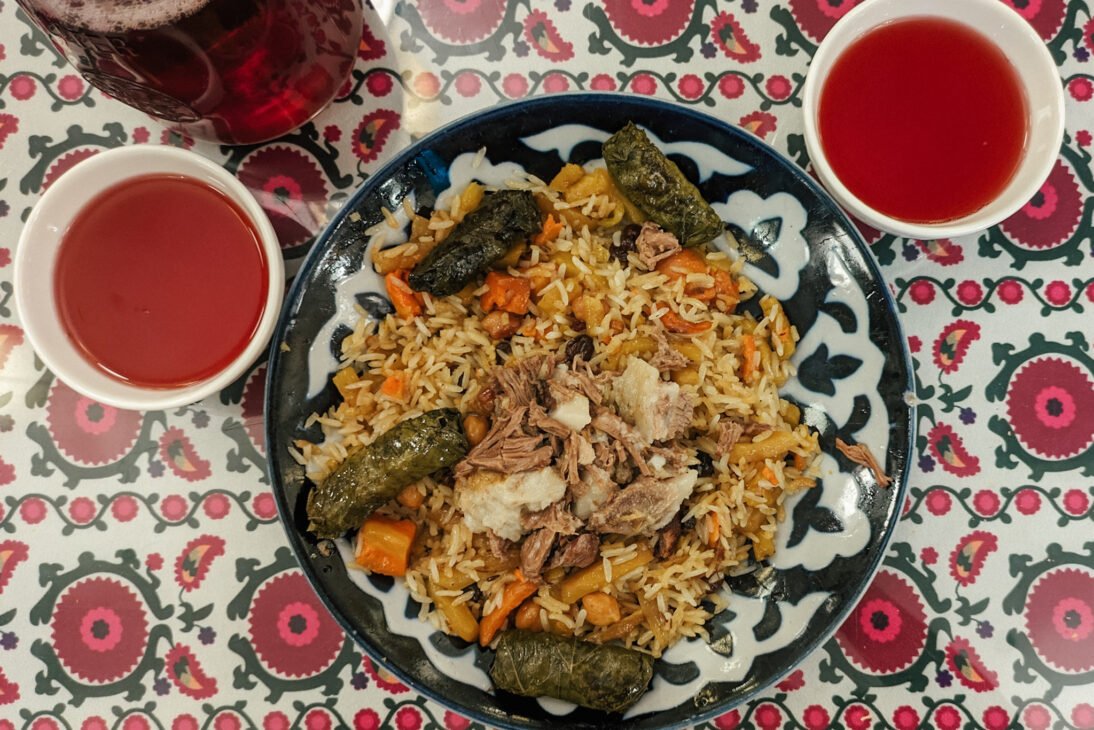
Plov (плов)
Dish Type: Rice Pilaf / National Dish
Primary Meat: Lamb or Beef (sometimes topped with horse meat sausage)
Flavor Profile: Rich, savory, cumin-forward, and hearty
Must-Try Location: Central Asian Plov Centre (Tashkent) or Bukhara Plov (for a less oily version)
You could call plov Uzbekistan’s national dish. Although it is popular in other post-Soviet countries such as in Kyrgyz cuisine, nowhere is plov taken as seriously as Uzbekistan.
Plov is a rice pilaf made with minced lamb, carrots, onions and spices such as cumin and coriander. It is traditionally prepared in a large kazan over an open fire. Most plov recipes will include fruits like raisins or barberries for sweetness and varying amounts of garlic and oil.
Plov is usually served at special events such as weddings and other large celebrations making it an important dish to Uzbek food culture. Recipes vary from place to place within Uzbekistan and while delicious, can sometimes be quite oily. If you don’t like oily food, I recommend trying the plov in Bukhara where the rice is boiled first making it considerably less oily.
The Central Asian Pilaf Centre is a must visit place in Tashkent. If you go to Tashkent, make sure you stop in and enjoy a plate and see how plov is made.
Look for плов on a menu written in Cyrillic. A portion usually costs around 30,000 UZS – 35,000 UZS ($2.50 – $3.00 USD).
Please note: Some of these links are affiliate links, meaning I may earn a small commission if you make a purchase (at no extra cost to you)
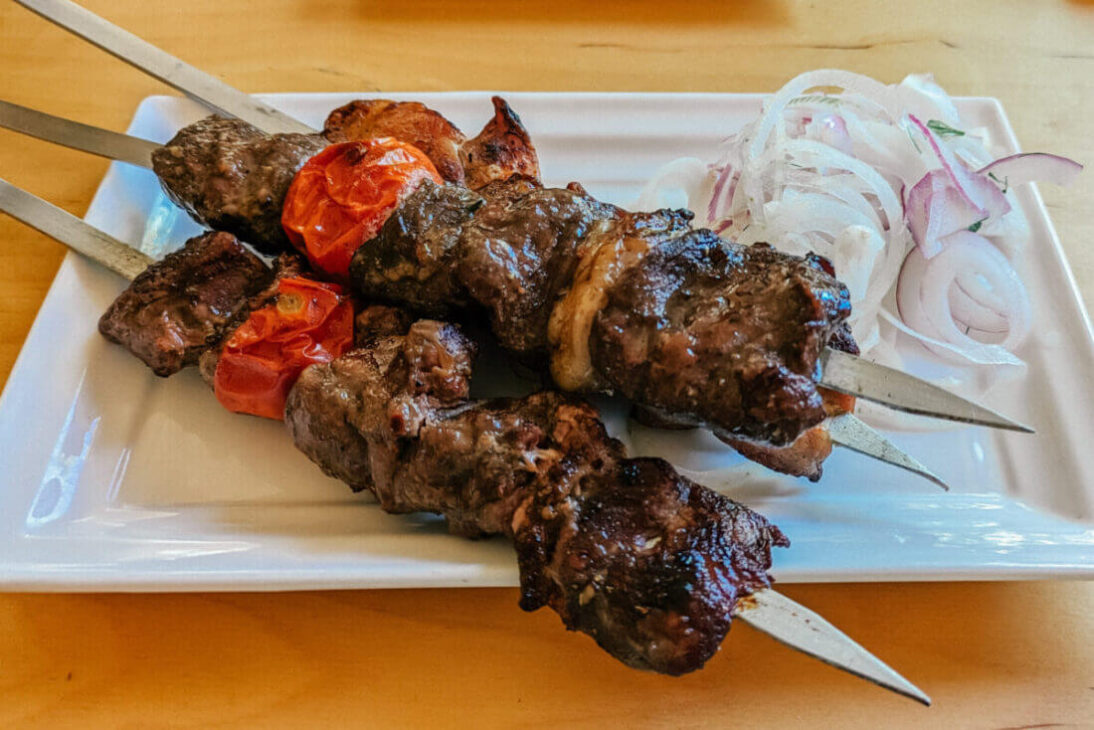
Shashlik (шашлыки́)
Dish Type: Grilled Meat Skewers / Barbecue
Primary Meat: Lamb, Beef, Minced Meat (Kiymali), or Chicken
Flavor Profile: Smoky, tender, marinated with spices, served with fresh sliced onions
Must-Try Location: Local outdoor chaikhana (tea houses) and barbecue stands nationwide
These grilled meat skewers are not all that different to skewered meats you will find all over the world. Shashlik is usually found at outdoor barbecue stands at traditional Uzbek restaurants.
They are usually lamb or beef, but sometimes can be found made with chicken. The meat is marinated in spices and grilled over hot charcoal making them tender and smoky-flavoured.
Look for шашлыки́ if the menu is in Cyrillic. At local stalls and markets you can get shashlik for 12,000 to 18,000 UZS ($1.00 to $1.50 USD) per skewer. Expect to pay roughly double that at tourist restaurants. Traditional Uzbek Soups and Noodle Dishes
Traditional Uzbek Soups and Noodle Dishes
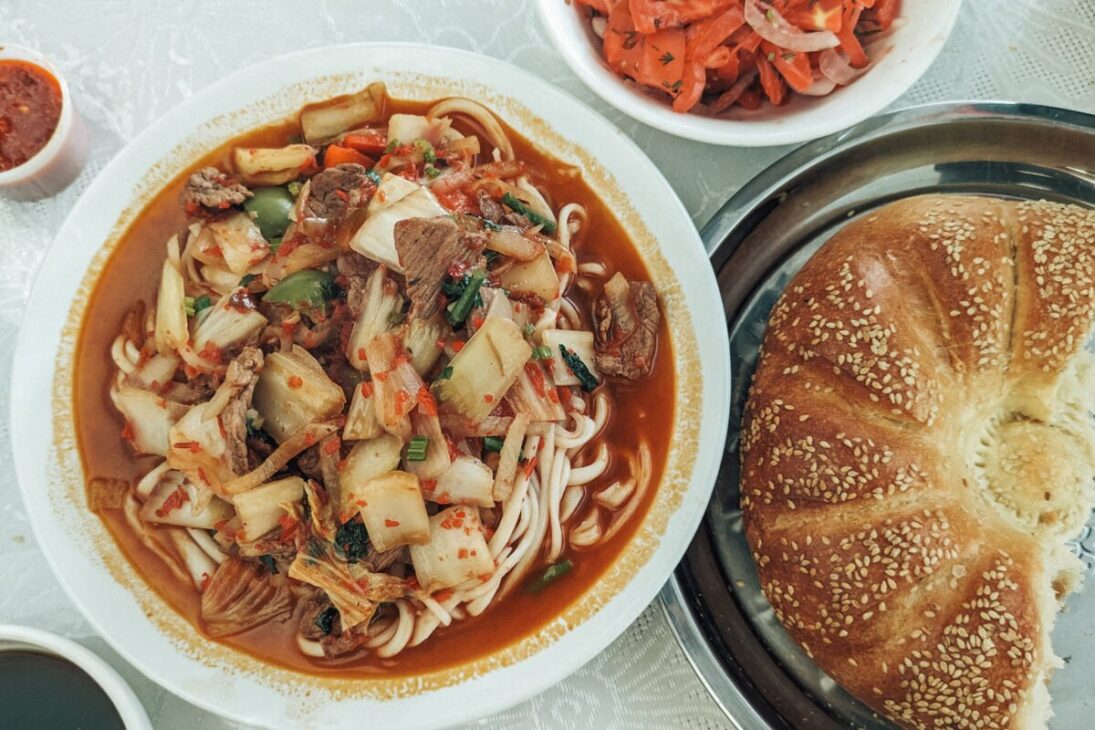
My favourite Uzbek food: Lagman (Лагман)
Dish Type: Hand-Pulled Noodle Soup (or Stir-Fried)
Primary Meat: Beef or Lamb
Flavor Profile: Savory, chewy noodles with fresh herbs, bell peppers, and rich broth
Must-Try Location: Qorasaroy Lagman near Khast-Imam Square (Tashkent)
This hearty noodle soup features hand-pulled noodles served in a savory broth with meat, vegetables and herbs. The best place to try lagman is at local cafes and noodle houses in cities like Tashkent and Samarkand.
Lagman was my favourite Uzbek food. I tried it many times but the best one that I found was at Qorasaroy Lagman near Khast-Imam Square in Tashkent. Qorasaroy Lagman is a local style restaurant which feels like a big food hall. It is close to one of the biggest attractions in Tashkent so there were a couple of other tourists there but it still felt very local.
The noodles were made at the restaurant and had that delicious chewy freshness. They don’t have an English menu but the first item on the menu is lagman – and that’s definitely what you should order here!
Look for Лагман if the menu is in Cyrllic. Prices vary widely depending on where you try this delicious dish. Local eateries should cost around 40,000 UZS. Expect to pay up to 80,000 UZS are tourist restaurants.
Shivit Oshi (Шивит оши)
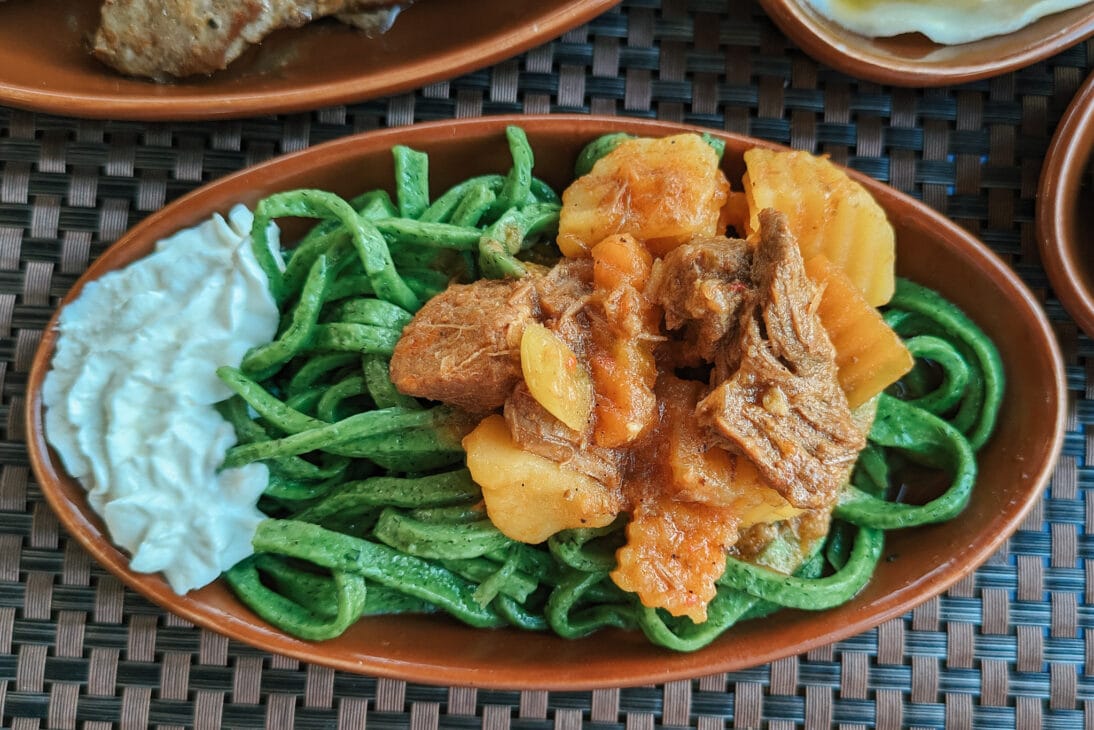
Dish Type: Dill-Infused Green Noodles with Stew
Primary Meat: Beef (or vegetarian without stew topping)
Flavor Profile: Herby, fresh, dill-forward with a tangy yoghurt sauce and warm meat stew
Must-Try Location: Terrassa Cafe & Restaurant inside Itchan Kala (Khiva)
Shivit oshi is a dish native to Khiva although it is possible to find it in other parts of Uzbekistan. Noodles are dyed a bright shade of green by infusing them with fresh dill. Shivit Oshi literally means “dill dish”. The vibrant noodles are then topped with a stew of beef and potatoes and served with a tangy yoghurt.
The best place to try shivit oshi is in Khiva. Most local restaurants will have it on the menu. I only managed to try shivit oshi once at the Terrassa Cafe and Restaurant in Itchan Kala. I really enjoyed how fresh and zesty the noodles tasted. It works perfectly with the hearty stew and yoghurt accompaniments.
Look for Шивит оши if the meny is in Cyrillic. Expect to pay about 50,000 to 70,000 UZS ($4.00 – $5.50 USD) per portion.
Mastava Uzbek traditional soup (мастава)
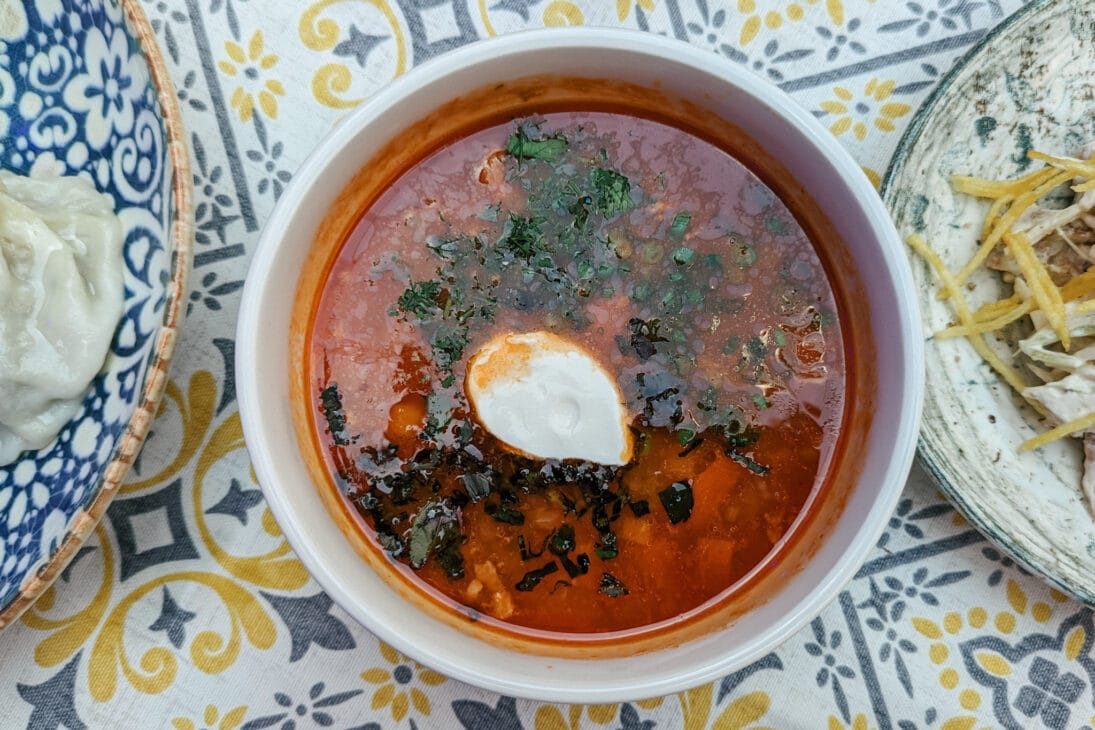
Dish Type: Rice & Meat Soup
Primary Meat: Lamb or Beef
Flavor Profile: Warm, comforting, spiced with cumin, coriander, and black pepper
Must-Try Location: Joy Restaurant (Bukhara)
Mastava is a traditional Uzbek soup made from rice, meat (such as lamb or beef), vegetables and sometimes legumes. It is seasoned with various spices such as cumin, coriander, and black pepper, and often garnished with fresh herbs like cilantro or parsley.
Mastava is known for its hearty and comforting nature, similar to an Irish stew. It is a popular dish enjoyed throughout Uzbekistan during the colder winter months.
You will find mastava on menus around the country. Look for мастава if the menu is in Cyrillic. The best one that I tried was at Joy Restaurant in Bukhara which cost 50,000 UZS ($4.20 USD).
Dumplings and Savoury Pastries
Manti (манты)
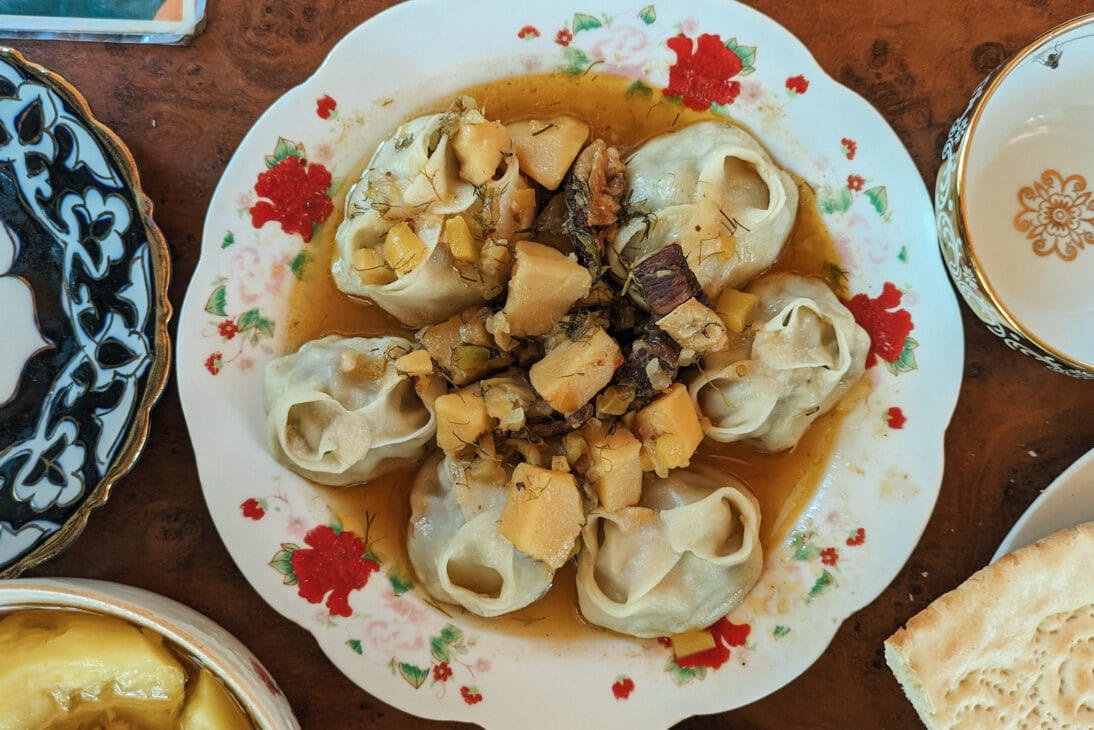
Dish Type: Steamed Dumplings
Primary Meat: Minced Beef or Lamb (Pumpkin/Potato for vegetarian option)
Flavor Profile: Juicy, tender dough served with sour cream (smetana) or yoghurt
Must-Try Location: Traditional local cafes in Tashkent, Samarkand, and Bukhara
These steamed dumplings can be found all throughout Central Asia. Manti are usually filled with either beef or lamb meat and onion and steamed. They are typically served with sour cream or yogurt.
Manti is one of the most common Uzbek foods. You can find them at most restaurants serving local food. The great thing about manti is that they will be a little bit different every time you order them, but they are consistently delicious.
Look for манты if the meny is in Cyrillic. They cost about 30,000 to 50,000 UZS ($2.40 to $4.00 USD) per portion.
The best Uzbek street food: Samsa (Самса)
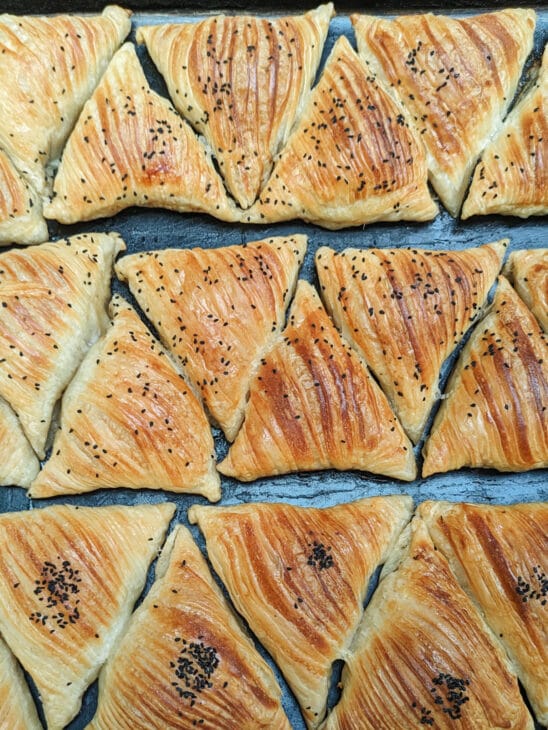
Dish Type: Baked Savory Pastry / Street Food
Primary Meat: Minced Lamb or Beef (also available with Pumpkin or Potato)
Flavor Profile: Flaky, golden, buttery, and seasoned with onion and cumin
Must-Try Location: Chorsu Bazaar street stalls (Tashkent) or roadside tandoor bakeries
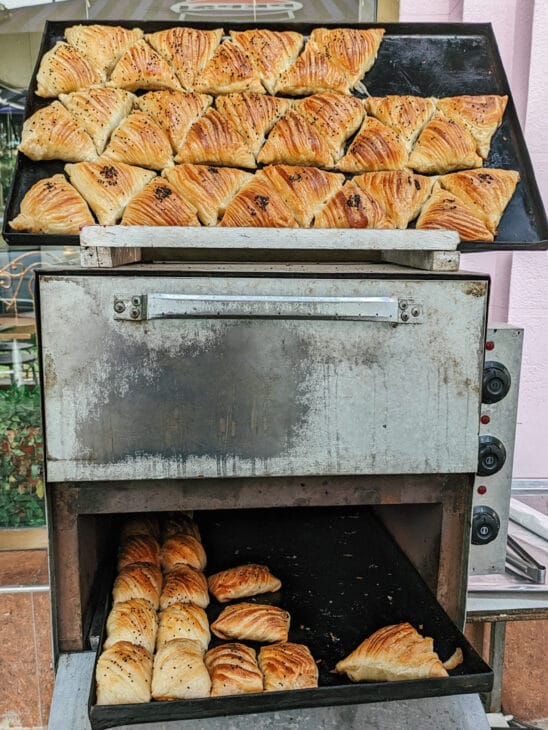
These savoury pastries are typically filled with minced lamb or beef, onions, and spices. They are a popular and convenient snack and are often found at street stalls, markets and bakeries around the country.
The fillings, shapes and sizes of samsa can vary but they are reliably golden brown, flakey and delicious!
Look for Самса if the menu is in Cyrillic. Prices range from 6,000 – 9,000 UZS (less than $1USD) depending on the filling and where you buy them.
Chuchvara (чучвара)
Dish Type: Boiled or Deep-Fried Mini Dumplings
Primary Meat: Minced Lamb or Beef
Flavor Profile: Crisp and crunchy (fried) or comforting and savory in bone broth (boiled)
Must-Try Location: Local family-run restaurants in Samarkand and Bukhara
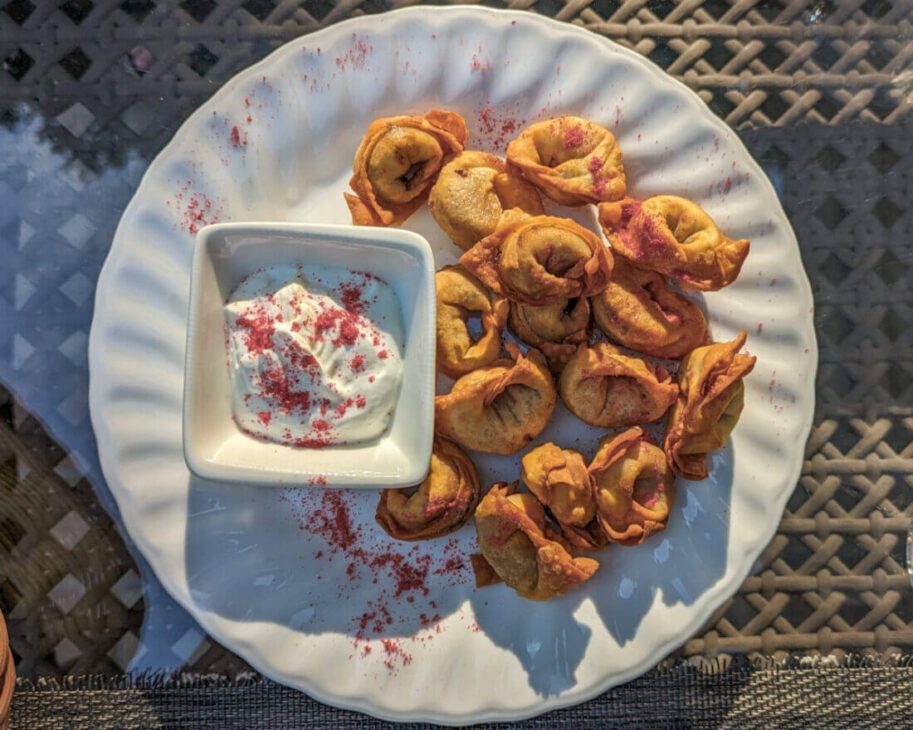
Chuchvara are similar to manti but smaller. They are the ravioli of Uzbek cuisine, and are sometimes translated as ravioli on English menus.
Chuchvara are filled with lamb or beef and are typically boiled in a bone broth. Fried chuchvara are also common in Uzbek cuisine. They are deep-fried in oil and come served with a sour cream-like sauce.
They are so crispy and delicious! It makes me wonder why we don’t fry pasta more often.
Look for чучвара if the meny is in Cyrillic. In a local stall or market a serving should cost around 12,000 – 18,000 UZS ($1.00 – $1.50 USD). In sit-down restaurants, expect to pay 50,000 – 75,000 UZS ($3.80 – $5.75 USD).
Delicious Breads and Desserts
Halva (халва)
Dish Type: Traditional Dessert / Confectionery
Primary Ingredients: Seeds/Nuts (Sesame/Tahini, Sunflower, Pistachio) or Toasted Wheat & Milk
Flavor Profile: Sweet, nutty, dense, and fragrant
Must-Try Location: Local sweet stalls at Siab Bazaar (Samarkand) or Bukhara Bazaar
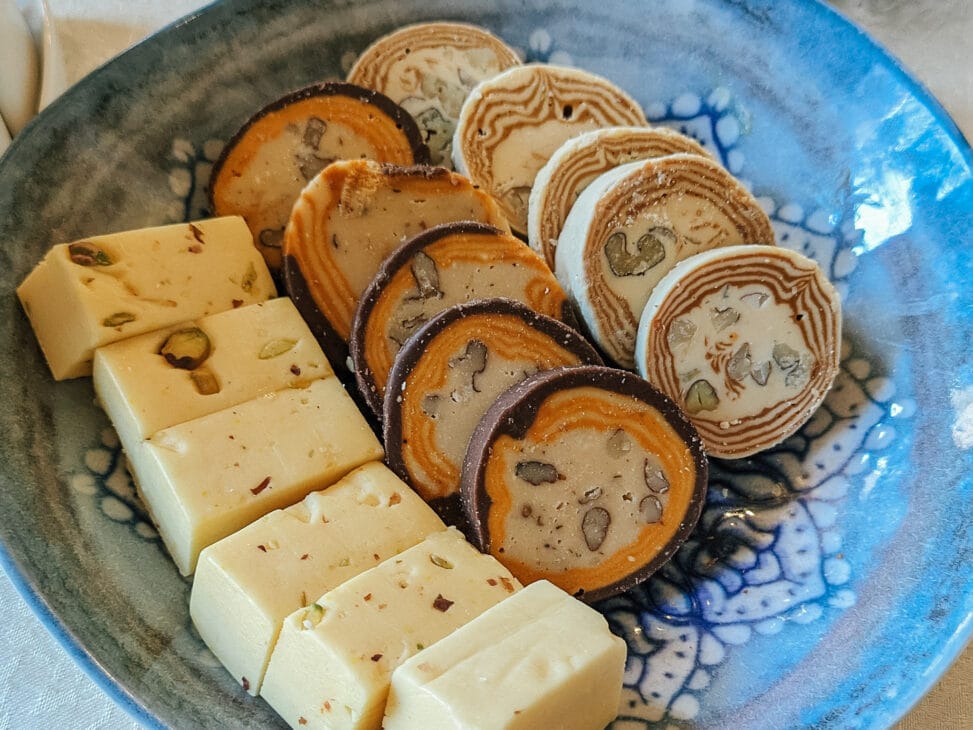
Halva , also known as “halva-soni”, is a traditional dessert in Uzbek cuisine. The name halva comes from Arabic language meaning “sweet”. Halva is thought to have originated in Persia but is now a common sweet throughout the Middle East, Central Asia and the Balkan region. If you’ve visited these regions you are sure to have encountered this delicious sweet in bazaars or family homes.
There are even variations of halva within Uzbekistan cuisine. Halva can be made from toasted wheat flour, tahini or sesame, ground nuts or milk. It often includes local nuts such as almonds, walnuts or pistachios as well as other spices or flavourings.
Uzbek halva is typically served in small squares or rectangles and enjoyed as a treat alongside tea or as part of festive occasions and celebrations.
The most sacred Uzbek food: Non flatbread
Dish Type: Sacred Tandoor Flatbread
Primary Ingredients: Wheat flour, water, yeast, black nigella seeds
Flavor Profile: Dense, crispy crust with a soft center (varies from flaky to ornate)
Must-Try Location: Freshly baked from street tandoor ovens in Samarkand (famous for heavy, shiny bread)
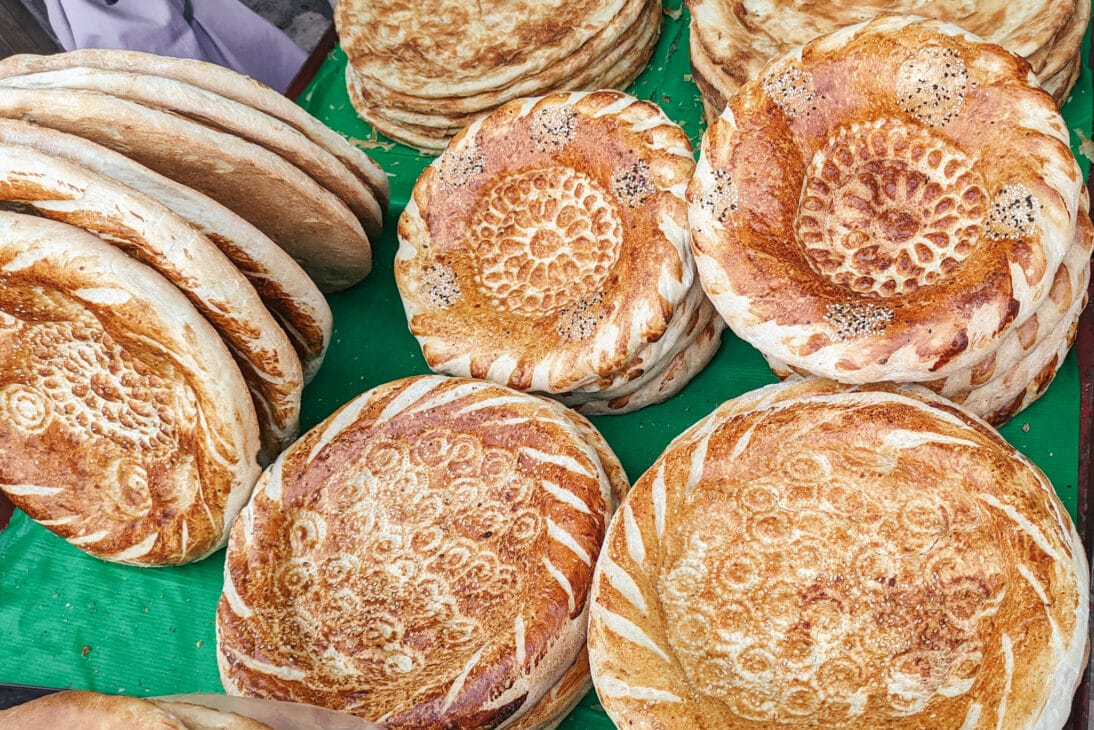
Non bread is probably the most iconic of all Uzbek foods. Bread is sacred to Uzbek people and it is included in a lot of cultural rituals and traditions.
Breaking bread is an important part of an engagement ceremony in Uzbekistan symbolising two families coming together.
Traditionally when a young man would leave to go to war, he would bite off a piece of bread. The rest of the bread would be kept for him to have when he returned.
There are different types of bread throughout Uzbekistan. Visit local markets and bakeries to see the different types. Some are flakey and soft and others are ornately decorated and cooked in a tandoor style oven until crispy.
Uzbek food for vegetarians
Uzbekistan cuisine is generally very meat heavy reflecting the country’s agrarian and nomadic past. While vegetarian food isn’t traditionally common in Uzbek cuisine, it can easily be found in all of the major tourism destinations.
Look out for vegetarian manti that is filled with pumpkin and other vegetables. It is sometimes possible to order dishes like plov without meat. Many restaurants will have extensive soup menus that will usually have vegetarian options. Seasonal fruits such as watermelon and apricot are also abundant and delicious.
Uzbek salads
Salads are common at restaurants in Uzbekistan. In more local restaurants it is typical to get a local salad called achichuk served with a meal. Achichuk is a tomato, cucumber and onion salad, usually with some herbs like dill or parsley. It’s the perfect accompaniment to a main meal.
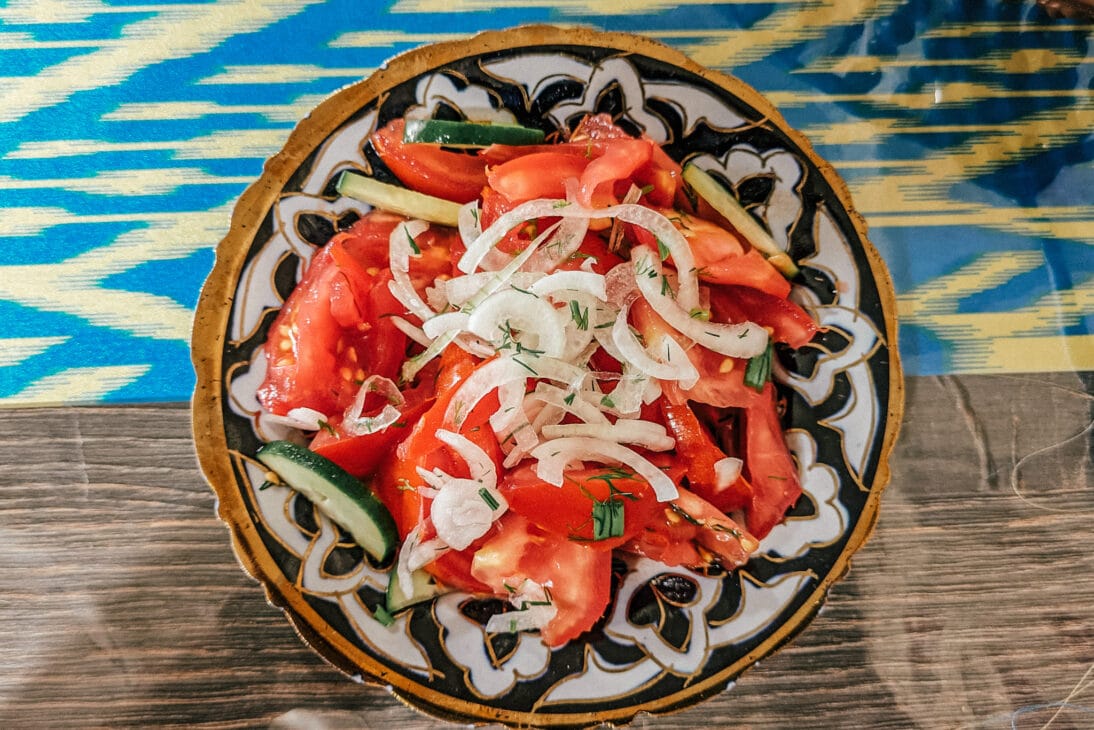
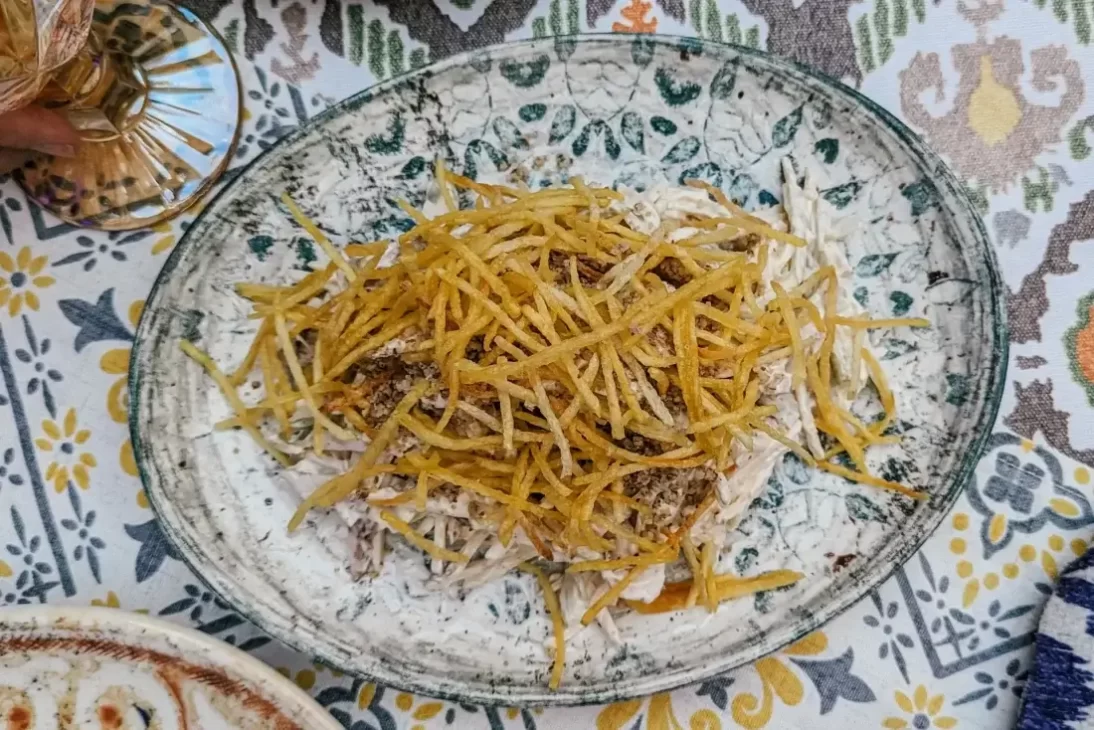
Many restaurants that cater to tourists will have extensive menus with many salads robust enough to be a meal in itself. Some of the salad combinations are very creative. They don’t appear to be traditional local salads, and were unlike anything I’ve seen elsewhere either. We had a few salads show up at our table looking nothing like what we expected. They might not be that healthy, they are tasty though!
Best food experiences in Uzbekistan
Visiting the Central Asian Pilaf Centre
One of the best things to do in Tashkent to get an idea of local Uzbek food culture is to visit the Central Asian Pilaf Centre or Plov Centre.
Here you can watch the talented chefs prepare plov in a huge kazan. There are also bakers making traditional non bread in equally huge wood-fired ovens.
The restaurant attached seats hundreds of people and is always bustling around lunch time.

Shared menu at Terrassa Cafe in Khiva
Inside Itchan Kala in Khiva there is a restaurant called Terrassa Cafe and Restaurant.
Not only does this restaurant have one of the best views of any restaurant in Uzbekistan, overlooking Itchan Kala west gate, they do a dish where you can sample 8 different national foods in tapas size portions.
Sakkis Ta’m includes 8 small portions of local foods, perfect for 2 people to share. If you want a quick introduction to Uzbek food, or if you don’t want to risk ordering a full portion of something you may not enjoy, this meal is a great option.
Sampling nuts, dried fruits and local sweets at the bazaar
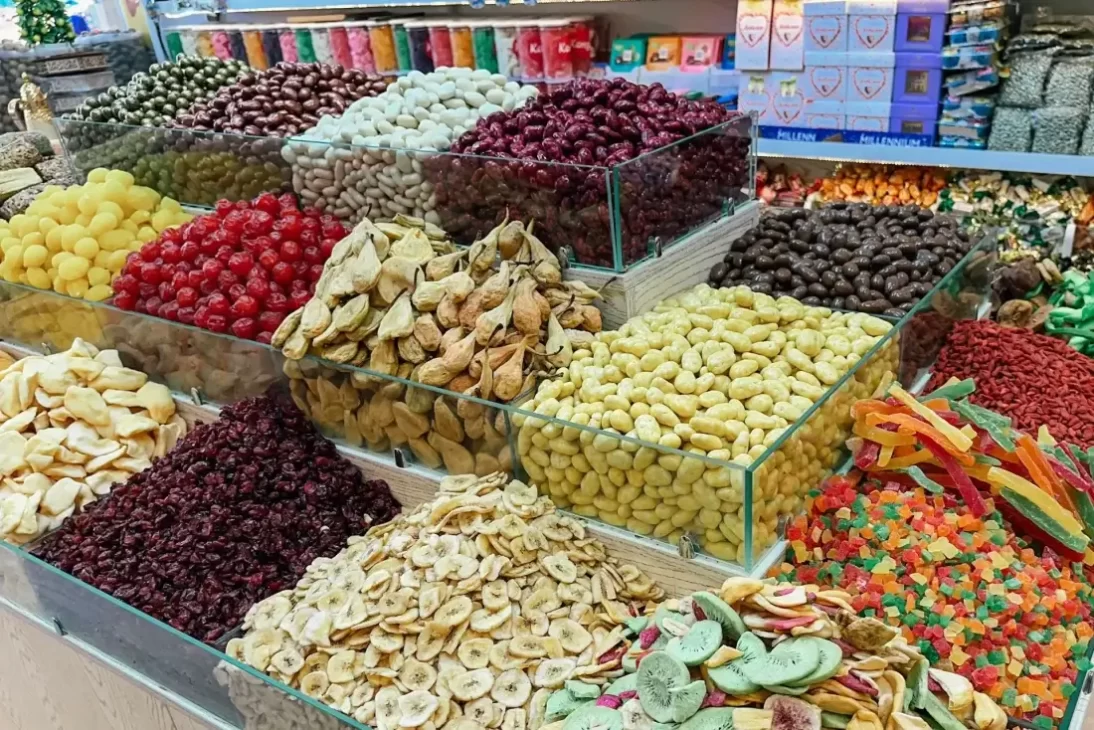
One of my favourite introductions to Uzbek food was a visit to a stand at the bazaar in Bukhara that sold an array of dried fruits, nuts and halva. Most stall owners are happy for you to taste test a few things before you buy.
At most bazaars, you will see small stores that have nuts or spices out the front, but also have an air-conditioned store that keeps delicious sweets such as chocolate covered cashews or yoghurt covered pistachios. Again, if you show some interest in buying, the owner will generally give you different things to taste test.
My favourite were hazelnuts covered in a dried pomegranate yoghurt which were to die for! I think about these almost daily.
Cooking classes for Uzbekistan cuisine
If you’re interested in learning to cook Uzbek food, consider taking a cooking class with a local.
I love to take cooking classes when travelling, primarily for the opportunity to spend time with a local person and learn about something important to them. They often include market tours so you can ask questions about the unique things for sale.
This cooking class in Samarkand takes place in a family home and teaches you how to make a traditional plov from scratch.
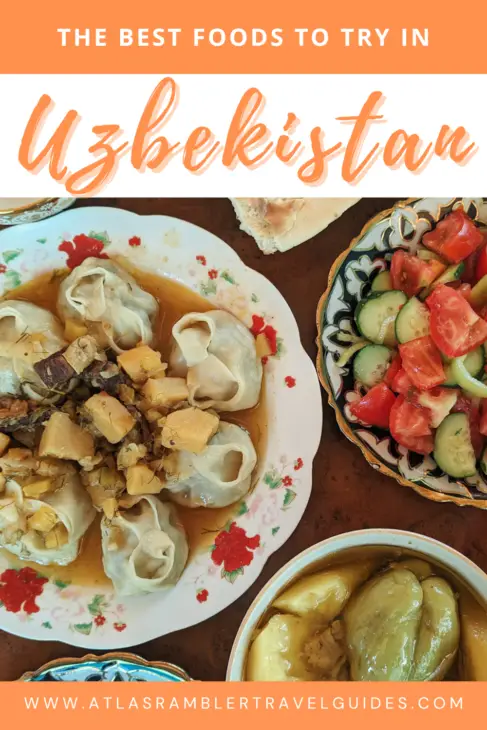
Like it? Pin for later!
Looking for more inspiration for travelling in Uzbekistan?
The Best Things to do in Khiva, Uzbekistan
The ultimate 3 day Tashkent itinerary
The complete Uzbekistan travel itinerary
The best time of year to visit Uzbekistan


The Uzbekh cooking class looks like a wonderful idea for a visit. That way you can bring some of these wonderful looking dishes back home.
I would love to try some of these Usbek foods. The Manti dumplings look delicious. The salad topped with potato chips sounds interesting too.
Lots of the foods look very tasty, looking forward to trying some one day.
Your photos are so colourful. Love them.
Also you’re so right, local places are the best way to experience different cultures. Always love finding these off the main track places!
Manty & plove are truly delicious! They are popular not only in Uzbekistan!